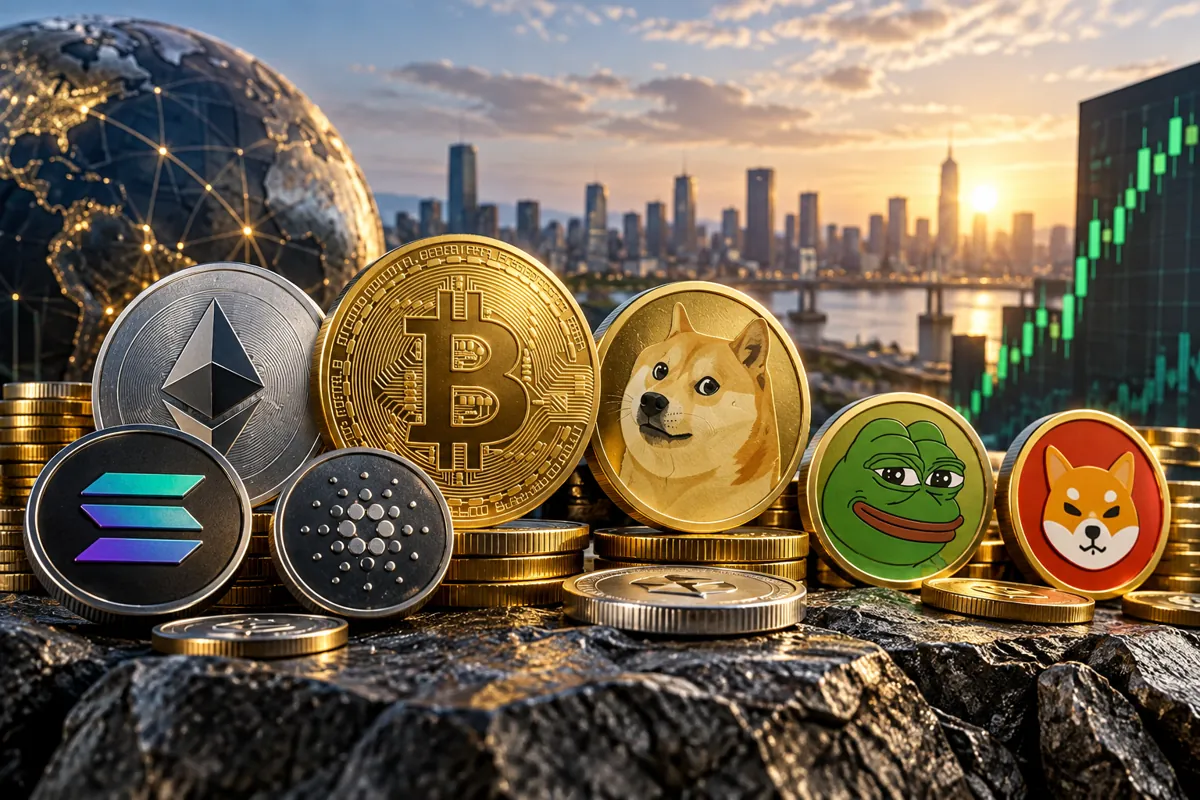
Altcoins & Memecoins
Dogecoin, Shiba, Cardano, Hedera and other alternative coins
Introduction
In recent years, the cryptocurrency market has expanded beyond Bitcoin and Ethereum, giving rise to thousands of alternative coins, commonly known as altcoins, and a subset known as memecoins. These digital assets have attracted a diverse group of investors and traders, with some experiencing significant gains while others face substantial losses. Understanding what altcoins and memecoins are, how they function, and their role within the broader crypto ecosystem is essential for anyone interested in digital investments today.
This guide explores the core concepts behind altcoins and memecoins, examines how they operate within blockchain networks, and discusses their practical applications. Additionally, it highlights common mistakes made by investors and offers recommendations from industry practitioners. Whether you are a curious newcomer or a seasoned trader, gaining a comprehensive overview helps navigate this fast-changing segment of the crypto world.
Definition and core concepts
Altcoins refer to any cryptocurrency other than Bitcoin. As of 2023, there are over 22,000 altcoins listed on CoinMarketCap, representing a variety of use cases, technological innovations, and communities. Popular examples include Litecoin, Ripple (XRP), Cardano (ADA), and Solana (SOL). Each altcoin typically has unique features, whether aimed at faster transactions, enhanced privacy, or specific applications such as decentralized finance (DeFi) or non-fungible tokens (NFTs).
Memecoins are a subset of altcoins characterized primarily by their origins in internet culture, memes, or social media trends. Unlike traditional altcoins that often target a specific technical problem, memecoins tend to have whimsical branding and limited functional utility. Dogecoin (DOGE), created in 2013 as a joke based on the Shiba Inu meme, achieved a market cap peaking at over $80 billion in 2021. Another notable example is Shiba Inu (SHIB), which in the same year reached a market capitalization of approximately $4 billion. Despite their humorous origins, memecoins can sometimes generate substantial trading volume and volatility.
These coins are often minted through a process called minting or proof-of-work, similar to Bitcoin, but some memecoins use different mechanisms, including proof-of-stake or delegated staking. Their supply models can vary from unlimited issuance to carefully capped maximums, influencing their scarcity and market behavior.
Altcoins and memecoins often form part of larger ecosystems. Developers launch new projects on existing blockchain platforms like Ethereum, Binance Smart Chain (BSC), or Solana, using smart contracts and token standards such as ERC-20 or BEP-20. These standards define how tokens operate on their respective chains, enabling interoperability, liquidity, and decentralized exchanges trading.
How it works
The functioning of altcoins and memecoins is rooted in blockchain technology. When developers create a new coin, they often deploy a smart contract on an existing blockchain or develop their own blockchain network. This contract or network establishes the rules for token issuance, transfer, and validation. For example, memecoins based on Ethereum utilize the ERC-20 token standard, granting them compatibility with wallets, exchanges, and DeFi protocols.
Transactions in these coins rely on validation mechanisms—mainly proof-of-work or proof-of-stake. Proof-of-work involves miners solving complex puzzles to confirm transactions, as seen in Bitcoin and original memecoins like Dogecoin. Proof-of-stake, favored by newer projects, involves validators locking up tokens to participate in block confirmation, which reduces energy consumption and increases scalability.
Liquidity pools play a significant role in altcoin trading. Decentralized exchanges (DEXs) like Uniswap or PancakeSwap facilitate trading of these tokens through automated market makers (AMMs), enabling users to swap coins without centralized intermediaries. Liquidity providers deposit pairs of tokens into pools, earning transaction fees proportional to their contribution.
Market prices fluctuate based on supply and demand dynamics distributed across multiple exchanges. Influencing factors include technological developments, community activity, regulatory news, and overall market sentiment. High volatility, particularly in memecoins, stems from speculative trading and social media hype, with daily price swings sometimes exceeding 30 percent within 24 hours.
Security mechanisms such as audits, smart contract verification, and community moderation aim to prevent fraud and hacking incidents. Nonetheless, project failures or scams have led to losses reported by investors, particularly in less established memecoin projects.
Practical application
Altcoins and memecoins find practical use across various domains. Many altcoins serve as utility tokens within their ecosystems. For instance, Binance Coin (BNB) facilitates discounted trading fees on Binance exchange, while Solana's SOL tokens are required to pay for transaction fees on its high-speed blockchain platform.
Decentralized finance utilizes altcoins to enable lending, borrowing, and yield farming. Projects like Aave and Compound use their native tokens to govern protocol decisions and incentivize user participation. In some cases, users earn interest or staking rewards, with yields reaching as high as 15 percent annually on certain DeFi platforms in 2023.
Memecoins, despite their humorous origins, have shifted toward practical uses. Some have developed NFTs, decentralized autonomous organizations (DAOs), or community-driven projects that integrate memecoin branding into wider ecosystems. For example, Shiba Inu launched ShibaSwap, a decentralized exchange that allows users to swap memecoins and earn tokens.
Trading memecoins can provide short-term profit opportunities. Traders leverage technical analysis, social media trends, and market sentiment to time buys and sells. Peaks can reach multiples of initial investment; for example, Dogecoin's value increased over 4000 percent from January 2021 to May 2021, when it surged from $0.005 to peak at around $0.73.
Investors also use memecoins for community engagement, fundraising (as seen with charity drives using memecoin donations), and experimental governance models. However, their speculative nature makes them highly risky investments, with potential for rapid total loss.
Some projects, like SafeMoon, claim to combine memecoin culture with passive income features, offering liquidity provision rewards. These projects often promote holding and staking as ways to earn returns, although with varying levels of transparency and security.
Altcoins and memecoins also influence Web3 development, enabling new forms of social platform monetization, artist collaborations, and innovative governance mechanisms that rely on native tokens.
Common mistakes
Investors often fall into traps when dealing with altcoins and memecoins. A common mistake involves ignoring research and trusting social media hype. Memecoins with little or no utility can skyrocket quickly but often crash equally fast, leading to significant financial losses. For instance, some tokens have seen 80 percent drops within days after massive surges fueled by online communities.
Another issue is improper risk management. Investing too much money into highly volatile coins without setting stop-loss orders or diversification increases vulnerability to market swings. An investor who put $10,000 into a memecoin that quadrupled may have lost most of their capital if the coin's value plummeted shortly after.
Many newcomers overlook project security. Investing in unverified smart contracts or obscure tokens without checking for audits or community reviews exposes funds to hacking or scams. The 2022 case of Squid Game token, which reached a $1.2 billion market cap before rug-pulling and disappearing, exemplifies this risk.
Timing is often misjudged as a mistake. Buying at peaks during social media fads can lead to trapped positions, especially for coins with no clear long-term value. This behavior contributes to market bubbles and subsequent crashes.
Expert recommendations
Experienced traders advise thorough research before investing. Understanding the underlying technology, project goals, team background, and community activity helps evaluate long-term potential. Resources like CoinGecko, CoinMarketCap, and project white papers provide valuable data for assessment.
Risk management remains vital. Diversification across different altcoins, setting stop-loss orders, and only allocating a small percentage of one's portfolio to speculative tokens mitigate potential losses. The Crypto Risk Management Guide from the University of California, Berkeley, suggests limiting high-volatility trades to 10-15 percent of an overall crypto portfolio.
Security protocols should not be overlooked. Auditing smart contracts on platforms like CertiK or Quantstamp reduces vulnerability. Using reputable wallets and enabling two-factor authentication protect holdings from theft.
Stay updated with social media channels, developer activity, and regulatory developments. Price movements driven by memes and social sentiment can be unpredictable; keeping informed allows timely decision-making and avoids FOMO – fear of missing out.
Finally, approaching memecoins with a clear strategy and understanding that they are highly speculative is key. They can serve as short-term trading opportunities but seldom form the core of long-term investments. Balancing high-risk assets with more stable cryptocurrencies enhances portfolio resilience.
Conclusion
Altcoins and memecoins represent a dynamic part of the cryptocurrency universe. They offer a range of functionalities, from utility tokens to social media-driven assets, with market caps ranging from a few million dollars to over $80 billion in the case of Dogecoin. Their operation depends on underlying blockchain technologies, smart contracts, and liquidity exchanges, making them accessible through various trading and DeFi platforms.
While they can produce quick gains, the high volatility and speculative nature urge caution. Proper research, risk management, and security practices remain essential regardless of the coin type. For investors, understanding these digital assets fully helps navigate the unpredictable terrain of altcoins and memecoins effectively.