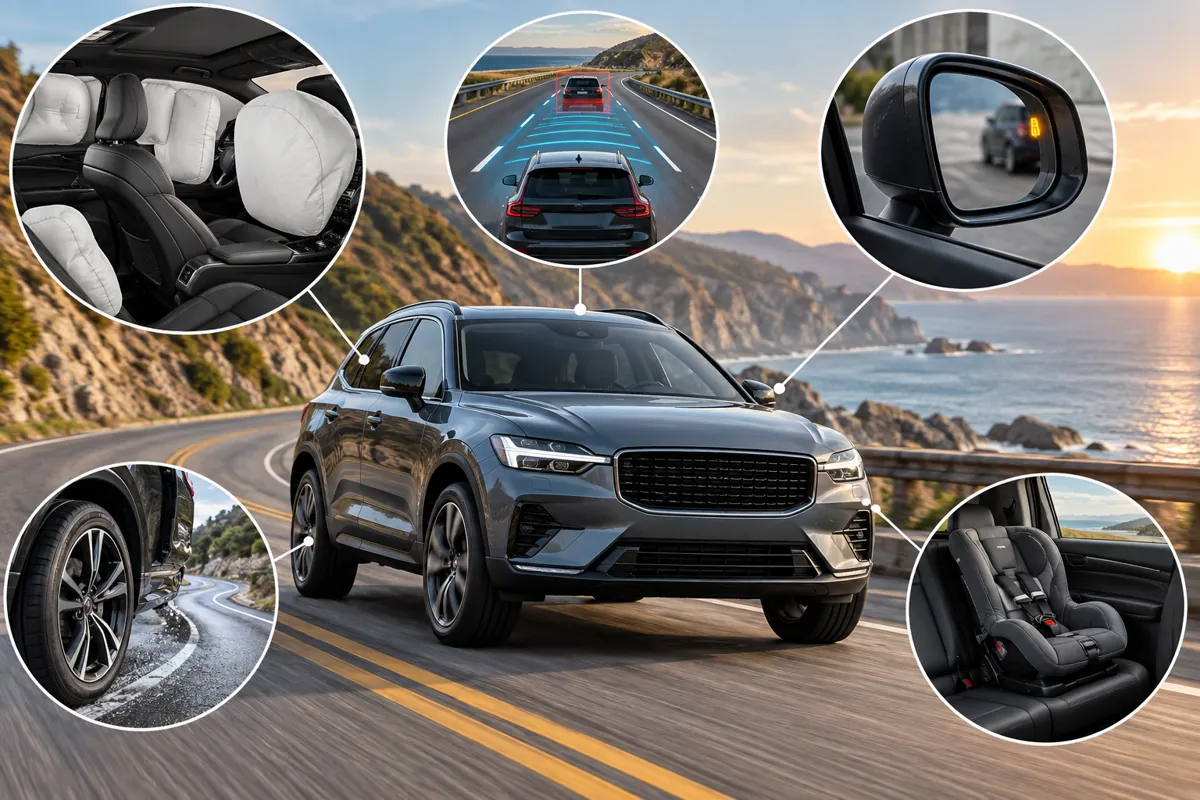
Car Safety & Features
Safety ratings, driver assists and in-car tech
Introduction
Vehicle safety features have become an essential aspect of modern automobiles, transforming the driving experience and reducing the risk of accidents. With advancements in technology, cars now come equipped with a variety of systems designed to enhance occupant protection, prevent collisions, and alert drivers to hazards. Understanding these features is critical for both consumers selecting a new vehicle and for current owners looking to maximize safety on the road.
More than ever, car safety features directly impact insurance premiums, resale value, and overall driving confidence. In 2024, the average new car in the United States includes over ten safety features, ranging from backup cameras to advanced driver-assistance systems. This comprehensive overview breaks down what these features are, how they work, and how they can be practically applied to improve everyday driving safety.
Definition and core concepts
Car safety features encompass electronic systems, mechanical components, and structural designs aimed at minimizing injury and damage during a crash or hazardous conditions. They can be broadly classified into passive safety features, which protect occupants during an impact, and active safety features, which work to prevent accidents altogether.
Passive safety features include airbags, seat belts, crumple zones, and reinforced frames. These elements activate or function automatically when a collision occurs to absorb energy and limit injury. Active safety features, on the other hand, include systems like anti-lock braking systems (ABS), electronic stability control (ESC), and collision avoidance technologies. These assist the driver in maintaining control and avoiding hazards.
The core concept behind modern vehicle safety is automation and early intervention. For example, collision mitigation systems use sensors and cameras to detect objects and apply brakes automatically if the driver does not react in time. The goal is to reduce the severity and frequency of crashes, ultimately saving lives and decreasing injuries.
Most safety features are governed by standards set by organizations like the Insurance Institute for Highway Safety (IIHS) and the National Highway Traffic Safety Administration (NHTSA). These bodies establish crash test protocols and safety ratings that influence consumer choices and manufacturer priorities.
How it works
Many safety features operate through a network of sensors, cameras, and computers that continuously monitor vehicle surroundings and dynamics. For instance, forward collision warning systems utilize radar and camera inputs to calculate the speed and distance of vehicles ahead. If a dangerous proximity is detected, the system alerts the driver with visual or audible signals.
Automatic emergency braking (AEB) takes action by automatically applying the brakes if the driver fails to respond to warnings. Data from radar sensors, which can range from 24GHz to 77GHz frequencies, enable precise detection of obstacles at distances up to 200 meters, depending on the system. When a collision risk is confirmed, the brake actuation happens within milliseconds, reducing the impact speed or preventing the crash entirely.
Lane departure warning (LDW) and lane keeping assist (LKA) systems analyze camera data to identify lane markings. If the driver unintentionally drifts out of lane without signaling, these systems issue alerts or gently steer the vehicle back into its lane. Adaptive cruise control (ACC), another active safety feature, uses radar and cameras to maintain a set distance from the vehicle ahead by adjusting speed automatically.
Structural components behind the safety features are engineered to absorb crash energy effectively. Crumple zones are designed to deform and dissipate impact energy during a collision, protecting the passenger compartment. Airbags deploy within milliseconds upon detecting a crash, inflating with gas from generators that produce nitrogen or argon. The deployment timing and intensity are calibrated based on crash severity and occupant size.
Behind these systems, manufacturers integrate complex algorithms and machine learning models that improve detection accuracy over time. As vehicles become more connected, data sharing between cars and infrastructure enhances safety systems' responsiveness, creating a dynamic safety network.
Practical application
Car safety features influence everyday driving in tangible ways. For example, a vehicle equipped with blind spot monitoring alerts the driver to vehicles in adjacent lanes through visual indicators or vibrations in the steering wheel. This information assists in safer lane changes, especially in heavy traffic conditions where blind spots are common.
Adaptive cruise control enables highway driving with minimal throttle adjustments. By maintaining a consistent distance from the vehicle ahead, drivers can reduce fatigue and improve safety during long trips. Studies indicate that ACC systems can decrease rear-end collisions by up to 40 percent according to the IIHS.
Collision avoidance systems operate seamlessly during urban commutes. For example, parking sensors and backup cameras help drivers navigate tight spaces, preventing accidents at low speeds. In 2023, the National Parking Association reported a 25 percent reduction in parking lot accidents among vehicles with such features.
In emergency scenarios, airbags and seat belts work together to reduce injuries. The National Highway Traffic Safety Administration (NHTSA) estimates that seat belts alone saved more than 14,000 lives in 2022. Occupants wearing seat belts are 45 percent less likely to die in a crash.
Advanced safety systems also assist during adverse weather conditions. Traction and stability control options help maintain directional control on icy or wet roads, decreasing skidding incidents. In snowy regions like upstate New York, these features are particularly valuable, reducing crash rates by as much as 30 percent according to the IIHS.
Thus, integrating safety features into regular driving routines leads to measurable improvements in safety outcomes. Regular maintenance, such as sensor calibration and software updates, ensures these systems function correctly and provide maximum protection.
Common mistakes
One common error is relying excessively on automated safety systems and neglecting driver attentiveness. For example, assuming that automatic emergency braking will always stop the vehicle can lead to complacency, increasing risk during complex or unpredictable scenarios.
Ignoring maintenance requirements for safety systems can also diminish their effectiveness. Sensors and cameras need regular cleaning and calibration. A dirty radar sensor or misaligned camera may cause false alerts or system failures. The Insurance Institute for Highway Safety recommends inspecting these components at least once a year.
Fitting older vehicles with aftermarket safety devices without proper compatibility checks can result in unreliable operation. Not all third-party systems are tested to meet safety standards or integrate seamlessly with existing vehicle electronics.
Additionally, many drivers fail to understand the limitations of safety features. For instance, lane assistance systems may struggle with faded lane markings or severe weather. Users often disable warnings or ignore alerts, reducing the overall safety benefits.
Expert recommendations
Vehicle safety experts advise selecting vehicles with comprehensive safety feature packages. According to Consumer Reports, models with automatic emergency braking, blind spot detection, and lane keeping assist often achieve top safety ratings and insurance discounts of up to 20 percent.
Regular training and familiarization with a vehicle's safety features enhance their effectiveness. Manufacturers recommend reviewing the owner’s manual and practicing system activation and deactivation in controlled settings before relying on them in traffic.
Maintaining sensors and cameras is vital. Experts suggest cleaning these components monthly using a soft cloth and checking for any physical obstructions. Software updates, provided by manufacturers, also improve system performance and safety capabilities.
Investing in newer models or aftermarket systems with high safety ratings can contribute to occupant safety and reduce accident costs. Insurance companies often offer incentives for vehicles equipped with the latest active safety features.
Conclusion
Car safety features continue to evolve, combining mechanical design and advanced electronics to protect drivers and passengers more effectively than ever before. When properly understood and maintained, these systems significantly reduce the likelihood of accidents and mitigate injuries when collisions occur.
Choosing vehicles with proven safety technologies and using them correctly can make an identifiable difference on the road. Staying informed about system capabilities, limitations, and maintenance requirements ensures these features deliver their full safety potential.