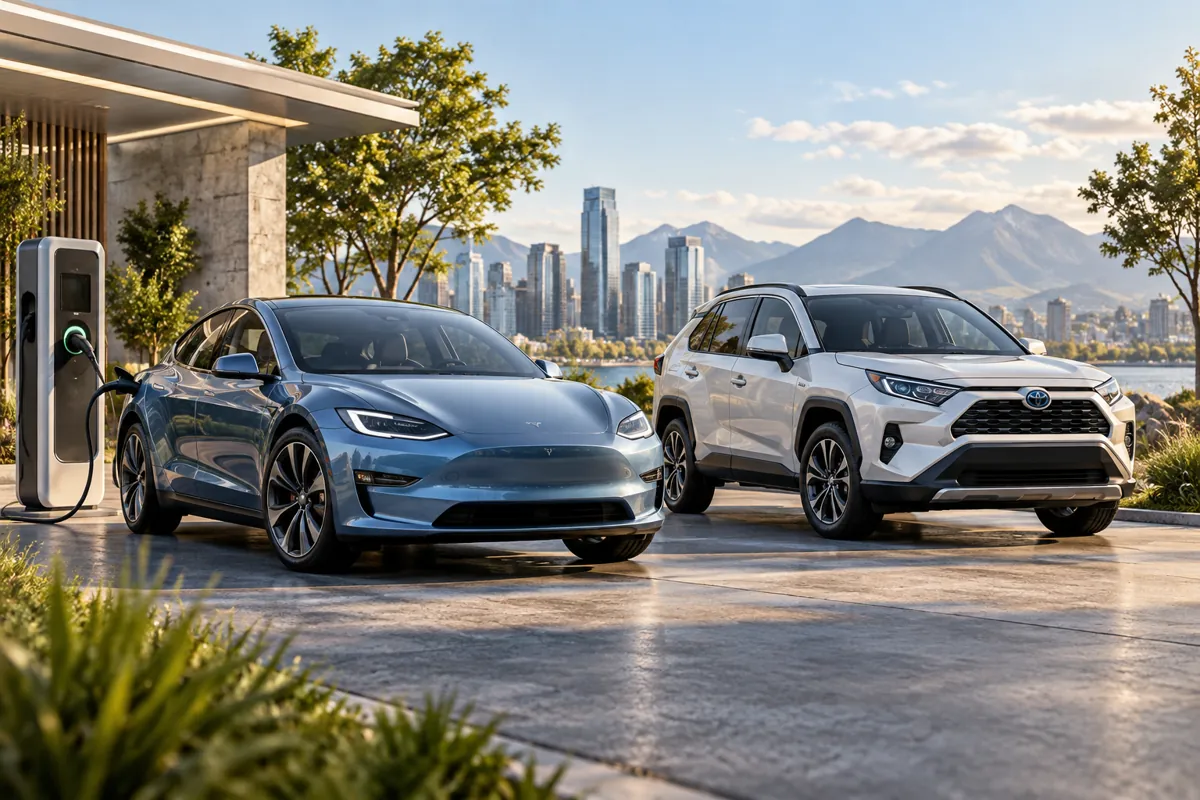
EVs & Hybrids
Electric cars, hybrids, range and charging
Introduction
Electric vehicles (EVs) and hybrid vehicles have become increasingly prevalent over the last decade. With rising concerns over climate change, urban air quality, and dependence on fossil fuels, consumers and governments are turning to greener transportation options. In 2023, EV sales worldwide crossed the 10 million mark, representing a 55 percent increase from the previous year, according to the International Energy Agency. This surge reflects technological improvements, falling battery costs, and supportive policies that make EVs more accessible and affordable.
Understanding the landscape of EVs and hybrids is essential for consumers, investors, and policy makers. These vehicles are not simply alternative modes of transportation—they embody a transition toward sustainable mobility. This guide offers a comprehensive overview of EVs and hybrids, covering their definitions, operational mechanics, practical implications, common pitfalls, and expert insights. Comprehending these facets helps individuals make informed decisions in a rapidly evolving industry.
Definition and core concepts
Electric vehicles are automobiles powered primarily by electric motors using energy stored in rechargeable batteries. Unlike conventional internal combustion engine (ICE) vehicles, EVs have no an internal combustion engine, fuel tank, or exhaust system. They rely entirely on electricity supplied by onboard batteries charged from external sources. Common types include battery electric vehicles (BEVs), which operate solely on electric power.
Hybrid vehicles combine an internal combustion engine with one or more electric motors and batteries. They can operate solely on the engine, solely on the electric motor, or a combination of both, depending on the driving conditions. The most prevalent type is the hybrid electric vehicle (HEV), which uses regenerative braking to recharge batteries and does not require external charging. Plug-in hybrids (PHEVs) are a subtype that can be charged from external sources, providing a range of electric-only driving typically between 20 to 50 miles.
The core concepts of EVs and hybrids include battery capacity, range, charging infrastructure, regenerative braking, and energy management systems. Battery capacity, measured in kilowatt-hours (kWh), directly influences the vehicle’s range. For example, a Tesla Model S P100D boasts a 100 kWh battery offering over 370 miles of range according to EPA estimates. Charging infrastructure encompasses the availability of public chargers, home charging setups, and fast charging stations with power outputs exceeding 150 kW allowing charging to 80 percent in under 30 minutes.
Understanding these core concepts is vital for evaluating vehicle options and their suitability to individual needs. Differences in technologies influence cost, convenience, and environmental impact, shaping how consumers interact with their transportation choices.
How it works
Electric vehicles rely on a series of components working in harmony to operate. The key element is the battery pack, which supplies power to the electric motor. Lithium-ion batteries are standard, with energy densities ranging from 150 to 250 Wh/kg. The motor converts electrical energy into mechanical motion. Depending on the design, the system can include additional components like inverters, controllers, and cooling systems to optimize performance and longevity.
The charging process involves plugging the vehicle into an external power source. Level 1 chargers operate on standard household outlets delivering 120 volts and provide approximately 4 miles of range per hour of charging. Level 2 chargers use 240 volts, typical for home installations, increasing charging speed to about 25 miles per hour. Fast chargers employ direct current (DC) and can replenish 80 percent of the battery in roughly 20 to 30 minutes, suitable for long-distance travel.
Hybrids work through a complex energy management system. In conventional hybrids, the internal combustion engine and electric motor work together or independently based on driving demands. Regenerative braking captures kinetic energy during deceleration, converting it into electrical energy stored in the battery. The system prioritizes electric mode under light loads, switching to engine power during high demand or sustained high speeds. PHEVs add the capability to charge externally, allowing drivers to maximize electric-only operation, especially within city environments.
The integration of these systems results in improved fuel efficiency—average hybrids can achieve 40 to 50 miles per gallon (mpg), while EVs typically have efficiency ratings exceeding 3 miles per kWh. The energy flow varies dynamically, governed by algorithms designed for optimal efficiency and battery preservation.
This operational complexity underscores the importance of vehicle design and software integration in maximizing performance and durability. Advances in power electronics, thermal management, and battery chemistry continue to push the boundaries of what EVs and hybrids can achieve.
Practical application
Consumers increasingly consider EVs and hybrids for daily commuting, long-distance travel, and fleet operations. Range anxiety—fear of running out of battery—has historically been a concern but modern EVs now often offer over 300 miles per charge. For example, the Lucid Air offers a range of up to 520 miles, according to EPA estimates, making long trips feasible without frequent stops for charging.
Charging infrastructure has expanded significantly. As of 2023, there are over 450,000 public charging stations across the United States, with an increasing share being fast chargers. Home charging remains the most convenient option, with installation costs typically between $1,000 and $2,500. Employers and municipalities are investing in workplace and public chargers to support EV adoption.
Financial incentives also promote practical use. Federal tax credits in the U.S. can reach up to $7,500 for qualified EVs, with additional state incentives offering further benefits. Moreover, some cities provide access to High Occupancy Vehicle (HOV) lanes for EV drivers, reducing commute times in congested areas.
The environmental impact of EVs and hybrids extends beyond personal ownership. Fleet operators have adopted electric buses and delivery vans, reducing emissions significantly. For instance, UPS operates over 12,000 alternative fuel vehicles, including EVs, which cut fuel costs by approximately 25 percent compared to traditional vehicles.
However, practicality depends on factors like charging habits, local infrastructure, and the vehicle's total cost of ownership. EVs generally have higher upfront costs—ranging from $30,000 to $120,000— but lower maintenance expenses over time. According to Kelley Blue Book, the average annual maintenance cost for EVs is about $330, compared to $1,200 for comparable internal combustion vehicles.
Battery lifespan is another consideration, with most manufacturers offering warranties between 8 and 10 years or 100,000 miles. Proper care, such as avoiding frequent fast charging and extreme temperatures, can extend battery life and maximize resale value.
As technology progresses, the adoption of vehicle-to-grid (V2G) systems enables EV owners to sell excess stored energy back to the grid, providing additional income streams and grid stabilization. This application exemplifies how EVs can integrate into broader energy management solutions in smart cities.
Common mistakes
Overestimating the range of EVs remains a frequent error. Many consumers assume their vehicle will consistently reach the maximum advertised range, but real-world conditions—such as high speeds, cold weather, and use of climate control—can reduce it by 20 to 40 percent. For example, a Nissan Leaf rated for 150 miles might only deliver 100 miles under winter conditions with the heater on full blast.
Neglecting the availability of charging options can cause inconvenience. Relying solely on home charging excludes those who have limited access to a suitable outlet or live in multi-unit dwellings where installation is difficult. It is vital to consider the proximity of public charging stations and the vehicle’s compatibility with fast chargers, especially for long-distance travelers.
Ignoring maintenance and thermal management systems can lead to costly repairs. Batteries require cooling and monitoring; neglecting these can result in reduced lifespan and performance. Some drivers overlook recall notices or firmware updates from manufacturers that address safety and efficiency issues, risking vehicle health and safety.
Choosing the wrong vehicle for specific needs without thorough research can also cause dissatisfaction. A compact EV might suit urban commuting but prove insufficient for hauling heavy loads or frequent long trips. Conversely, larger models like SUVs or trucks may entail higher costs and lower efficiency. Matching vehicle specifications to typical driving patterns ensures better ownership experiences.
Expert recommendations
Experts advise prioritizing vehicles with larger battery capacities if frequent long-distance trips are common. Investing in models with at least 75 kWh batteries can ensure a range of 250 miles or more, reducing planning constraints. Additionally, selecting vehicles compatible with rapid charging stations enhances convenience, particularly in regions with extensive fast charger networks like Electrify America or ChargePoint.
For optimal battery longevity, maintaining moderate charging levels—ideally between 20 and 80 percent—and avoiding frequent fast charging can extend battery health by several years. Using scheduled charging during off-peak hours can also reduce costs and grid stress. Regular software updates from manufacturers improve efficiency, safety, and feature sets.
Infrastructure planning is vital. Installing a Level 2 home charger can significantly reduce charging time and increase daily usability. For commercial applications, deploying workplace chargers encourages employee adoption and reduces reliance on fossil fuels. Governments are providing grants and incentives to support such installations, making ownership more affordable.
Environmental considerations recommend using renewable energy sources when charging EVs. According to the U.S. Energy Information Administration, renewable sources accounted for approximately 20 percent of electricity generation in 2022, with a goal to reach 40 percent by 2030. Access to clean electricity makes EVs even greener, decreasing lifecycle emissions and aligning with sustainability goals.
Conclusion
EVs and hybrids are reshaping transportation through technological innovation and policy support. Their increasing range, expanding infrastructure, and financial incentives make them more practical than ever for daily use. With proper understanding and planning, consumers can navigate the complexities of choosing, maintaining, and optimizing these vehicles effectively.
As the industry evolves, ongoing improvements in battery chemistry, charging infrastructure, and energy management will further integrate EVs and hybrids into mainstream mobility solutions. For individuals and businesses alike, embracing these technologies entails assessing specific needs and infrastructure landscapes, rather than relying solely on generic assumptions about electric transportation.